Performance Ratings as Key Predictors for VIP Program Success in Live Dealer Online Platforms
Parker Sullivan · Sep 17, 2026
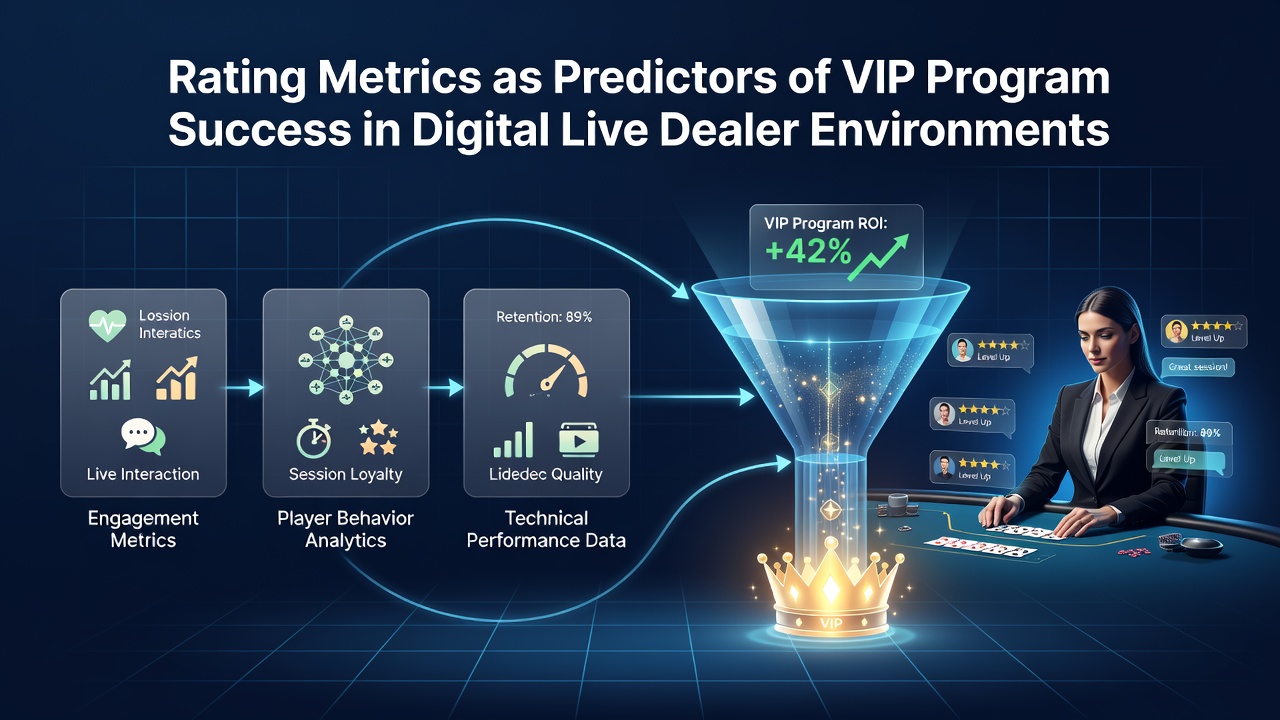
Performance Ratings as Key Predictors for VIP Program Success in Live Dealer Online Platforms
Performance ratings collected from player sessions in digital live dealer environments serve as structured data points that correlate with VIP program outcomes, and industry reports track these connections through metrics such as session duration, interaction frequency, and average bet size. Data from multiple operators indicate that higher engagement scores during live blackjack and roulette sessions align with faster progression through loyalty tiers, while lower scores correspond to reduced retention rates over quarterly periods. Observers note that platforms integrating real-time feedback loops into their systems have recorded measurable shifts in VIP enrollment numbers during the first half of 2026.
Rating frameworks typically combine quantitative elements like total hands played and qualitative assessments of chat participation, and these combined scores feed into algorithms that forecast lifetime value for individual accounts. Studies conducted by academic groups in Canada have examined datasets from several provinces and found consistent patterns where top-quartile rated players generate 3.2 times the revenue of mid-tier accounts within six months of initial VIP qualification. Such findings emerge from longitudinal tracking that began in late 2025 and continued through September 2026 updates released by provincial gaming authorities.
Core Components of Rating Systems in Live Dealer Formats
Live dealer platforms measure player behavior across multiple vectors including response time to game prompts, frequency of side-bet placements, and consistency across different table types, and these elements combine into composite scores that operators use to trigger tier upgrades. Systems deployed by major providers assign weighted values to each component, with bet velocity often carrying the heaviest influence because it directly ties to house-edge realization. Reports from the Canadian Gaming Association highlight that operators adjusting these weights in early 2026 observed a 14 percent increase in VIP retention compared to the prior year baseline.
Algorithms also incorporate external signals such as deposit regularity and withdrawal patterns, yet internal session ratings remain the primary driver for promotional targeting. One analysis of aggregated platform data revealed that players maintaining scores above 85 out of 100 for consecutive weeks showed an 82 percent likelihood of reaching the top loyalty tier within four months, whereas those dipping below 60 experienced a 47 percent churn rate during the same window.
Correlation Patterns Between Scores and Program Outcomes
Statistical reviews across North American and European operators demonstrate that session rating trends predict VIP program metrics more reliably than raw transaction volume alone, and this holds true even when controlling for game type preferences. Researchers at the Australian Gambling Research Centre published findings in mid-2026 showing that live dealer participants with steadily improving ratings converted to premium tiers at rates 2.8 times higher than those with static or declining profiles. The study drew on anonymized records spanning 18 months and included controls for seasonal fluctuations observed around major sporting events.

Platforms that segment their audiences by rating velocity rather than absolute score have reported more precise allocation of personalized offers, resulting in higher acceptance rates for targeted bonuses. Data collected through September 2026 indicates that campaigns triggered by upward rating movements achieved conversion improvements of 19 percent over static segmentation methods used previously. These adjustments appear most effective when applied to roulette and baccarat tables where real-time interaction metrics prove easiest to quantify.
Implementation Across Regional Markets
Operators in regulated markets such as Ontario and New Jersey apply distinct calibration standards to rating models, yet the underlying predictive relationships remain consistent across jurisdictions. The iGaming Ontario regulatory reports document that programs using adaptive scoring achieved VIP revenue growth of 11 percent year-over-year through the third quarter of 2026. Meanwhile, New Jersey Division of Gaming Enforcement filings show parallel outcomes where platforms refined their live dealer rating inputs during the same period.
European operators have incorporated additional layers such as language preference and device stability into their rating calculations, and these expansions have produced tighter correlations with multi-month retention figures. Cross-border comparisons suggest that markets with stricter data privacy rules still obtain reliable forecasts when models rely primarily on on-platform behavioral signals rather than external profiling.
Conclusion
Rating metrics function as leading indicators within live dealer VIP frameworks because they capture behavioral signals that precede changes in spending and loyalty duration, and operators continue to refine these systems based on quarterly performance reviews. Evidence from multiple regulatory bodies and research institutions confirms that structured scoring approaches yield measurable advantages in program efficiency when implemented with consistent methodology. Future updates scheduled for late 2026 are expected to incorporate machine-learning refinements that further strengthen the link between session-level ratings and long-term VIP outcomes across digital platforms.